


There are many reasons for unstable use of hydraulic breaker. Problems with the cylinder, front head ,back head, damage to the overflow valve, insufficient pressure, damage to hydraulic breaker parts, serious wear, etc. are all reasons for the failure. After checking one by one, the cause can be determined and repaired.
What is the situation when the hammer blowing frequency is unstable?
cause:
①The instability may be caused by the problem of the host.
②The hydraulic oil is too small and the flow is insufficient.
③ The overflow valve is damaged.
④The piston, control valve and spare valve are slightly strained.
⑤ The pipeline pressure is not enough.
⑥The pipeline is blocked.
⑦ Instability caused by the reaction force of broken objects.
⑧ The bolts are loose, and the size of the steel drill is wrong.
What can be easily caused by poor oil return?
Possible results:
①The breaking hammer is weak.
②The frequency is too slow.
③The oil temperature is easy to be high.
④ Waste diesel.
How to Diagnose Poor Oil Return : If the breaker strikes weakly and the oil temperature rises rapidly, check the oil return filter element first. A blocked filter increases back pressure, hindering the piston stroke. Expert Tip: Measure the back pressure; it should typically be below 10-15 bar for optimal SB81/HB30G performance.
The Importance of Independent Oil Return: Many unstable frequency issues stem from the oil return pipe being connected directly to the multi-way valve. For heavy-duty models like HWX1400, we strictly recommend an Independent Oil Return Line directly to the tank to prevent overheating and valve sticking.
It is also easy to cause the frequency of the hydraulic breaker to be unstable. This kind of situation is likely to occur when the oil return filter element is not replaced at the specified time, causing the filter element to be blocked and hindering the smooth flow of the oil return road. The oil return pipe directly returns to the multi-way valve. After long-term operation, the multi-way valve is easy to issue the card and the hydraulic oil heats up quickly, which reduces the striking effect of the breaker.
| Symptom | Potential Cause | Immediate Action |
|---|---|---|
| Low Frequency | Blocked return line / Low N2 pressure | Clean filter / Recharge N2 |
| Irregular Strikes | Damaged Pilot Valve / Relief Valve | Inspect valve core for bruising |
| Stuck Piston | Contaminated hydraulic oil | Change oil & replace NOK seals |
| High Oil Temp | Excessive bypass / Wrong oil viscosity | Check cooler & oil grade |
What are the main reasons for the hydraulic breaker to stuck issue and how to judge?
cause:
- The piston and diverter valve are bruised.
- Spare valve and relief valve issuance
- Insufficient hydraulic oil.
- The oil circuit is not smooth, and it is in a state of semi-blocking and not blocking.
- Insufficient pilot pressure.
- Excessive bushing clearance or a wear.
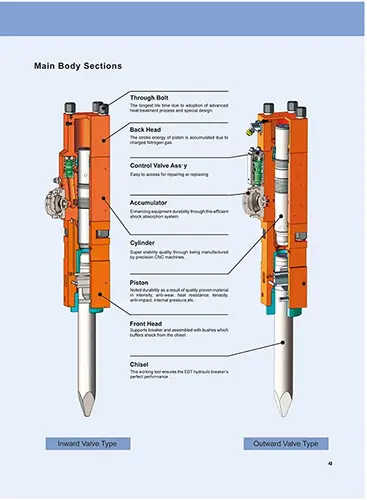
The unstable use of the hydraulic breaker will affect the use. The above reasons are still easy to see. Jinan Changhao Machinery has more than 15 years experience in manufacturing hydraulic breaker hammer and hydraulic breaker parts. If you encounter any unintelligible breaker failure, please contact us for guidance in time.
About Jinan Changhao Technical Support: With 15+ years of manufacturing experience, our technicians have diagnosed thousands of cases across CAT, Komatsu, and Sany machines. We ensure every breaker is pre-tested to prevent these common stability issues.
The optimum hydraulic oil temperature when the hydraulic breaker is working is 50-60 degrees, and the maximum temperature should not exceed 80 degrees. Otherwise, the load of the hydraulic breaker should be reduced.