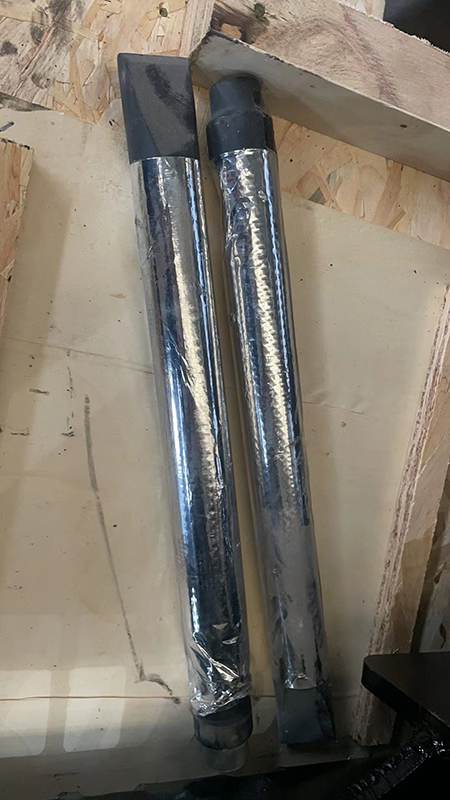


When selecting a hydraulic breaker attachment for a skid steer loader, it is recommended to evaluate the following six core dimensions to ensure optimal equipment performance, compatibility, and long-term durability.
1. Matching of Core Hydraulic Parameters (Crucial)
The hydraulic output capacity of the skid steer loader directly determines the impact efficiency of the hydraulic breaker.
Flow Rate: It is essential to ensure that the flow rate required by the hydraulic breaker falls within the output range of the skid steer’s auxiliary hydraulic system. If the flow rate is insufficient, the hydraulic breaker’s impact force will be weak; conversely, if the flow rate is excessive (e.g., using a “High Flow” mode with a small breaker), it may lead to hydraulic system overheating or damage to the valve block.
Operating Pressure: The operating pressure of the hydraulic breaker must be lower than the relief valve setting pressure of the skid steer’s hydraulic system. This ensures that the impact force is delivered effectively without causing damage to the machine’s pumps and valves.
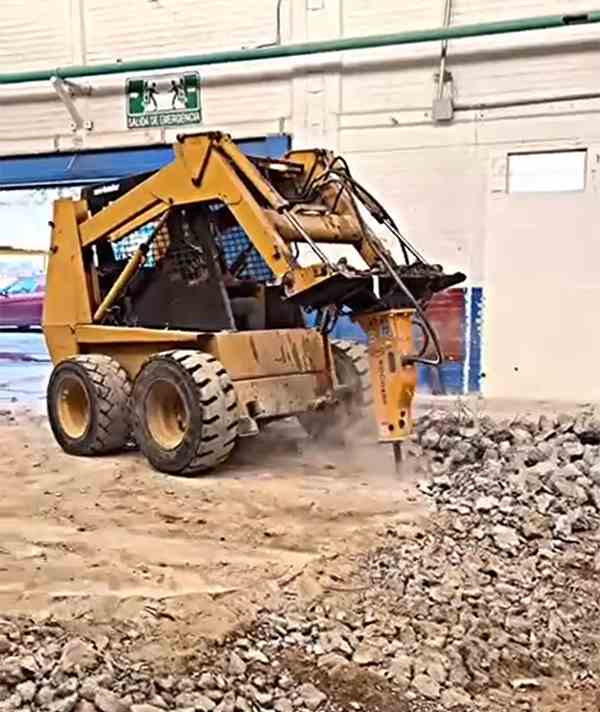
2. Balancing Machine Weight and Load Capacity
The stability and Rated Operating Capacity (ROC) of the skid steer loader serve as critical physical constraints during the selection process.
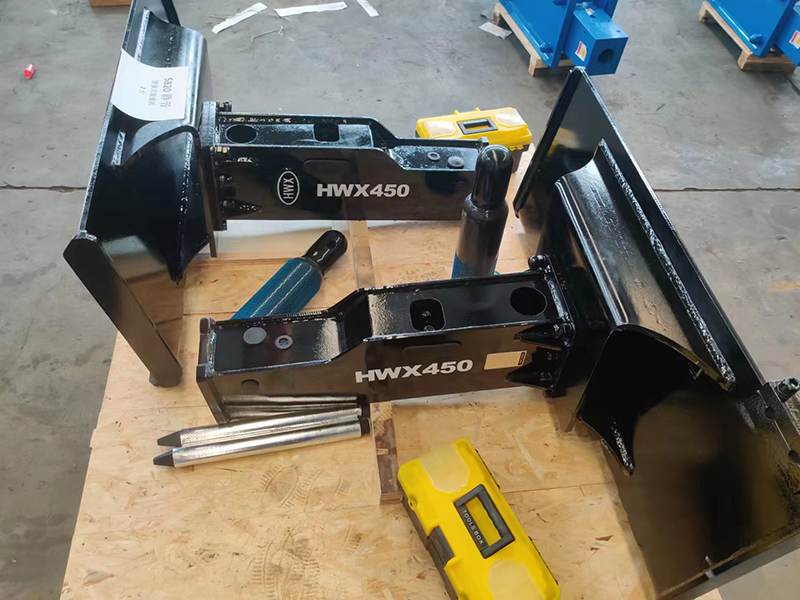
Tonnage Matching: The total weight of the hydraulic breaker should be appropriately matched to the skid steer’s load-bearing capacity. Typically, a 3-ton skid steer loader is recommended to be paired with a hydraulic breaker featuring a 45mm chisel diameter (e.g., model HWX450), while a 5-ton skid steer loader is recommended for a breaker with a 53mm chisel diameter (e.g., model HWX530).
Impact on Center of Gravity: An excessively heavy hydraulic breaker will cause the skid steer’s center of gravity to shift too far forward. This not only increases wear and tear on the front wheels or tracks but also compromises steering agility.
Recommended Ratio: As a general guideline, the weight of the hydraulic breaker should not exceed 60%–70% of the skid steer loader’s Rated Operating Capacity (ROC). This ensures that the machine remains stable and secure during lifting and maneuvering operations.
3. Compatibility of Mounting Brackets and Quick-Attach Systems
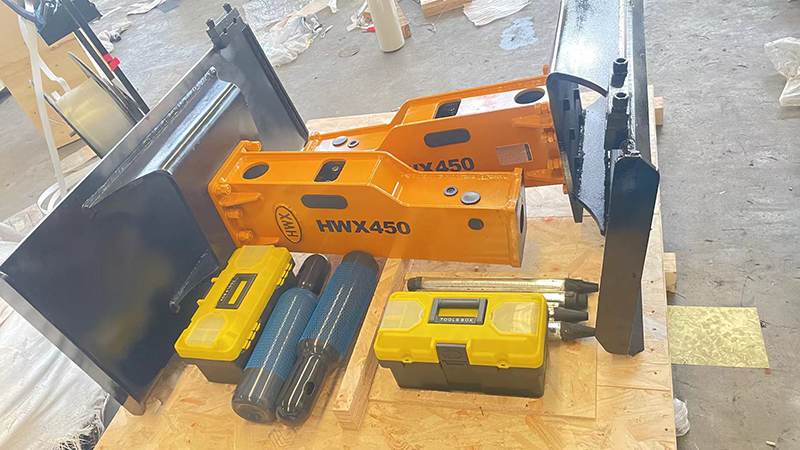
Adapter Plate: Ensure that the hydraulic breaker is equipped with a standard quick-attach mounting plate designed for skid steer loaders. The vast majority of skid steer loaders utilize a “Universal Skid Steer Quick Attach” system; therefore, verify that the backplate (the hooking mechanism) of the hydraulic breaker is fully compatible with this universal standard. Currently, most major brands (such as Bobcat, CAT, and Case) adhere to universal standards; however, it remains essential to verify the material composition of the mounting bracket. We recommend selecting high-strength alloy steels—such as Q355 or Q345B—to effectively withstand high-frequency vibrations.
4.About hdraulic breaker hose of the skid steer laoder
Hose Couplings: Skid steers typically utilize quick-connect couplings (e.g., Flat Face Couplers). It is crucial to verify that the specifications of the breaker’s hydraulic hose fittings—including the orientation of the male and female ends—and the overall hose length are sufficient to accommodate the full range of motion of the skid steer’s boom.
Hose Routing: Given the extensive range of motion of a skid steer’s boom, purchasers must carefully verify the length and connection orientation of the hydraulic hoses. This ensures that the hoses do not become severed or suffer abrasion against the machine body during operation.
5. Key Materials and Manufacturing Processes
As a professional manufacturer, HWX Jinan Changhao demonstrates product quality excellence primarily through meticulous attention to detail:
Heat Treatment Process: The application of professional heat treatment to the hydraulic breaker piston, chisel, and core valve assembly is the decisive factor in determining the product’s fatigue resistance and overall durability.
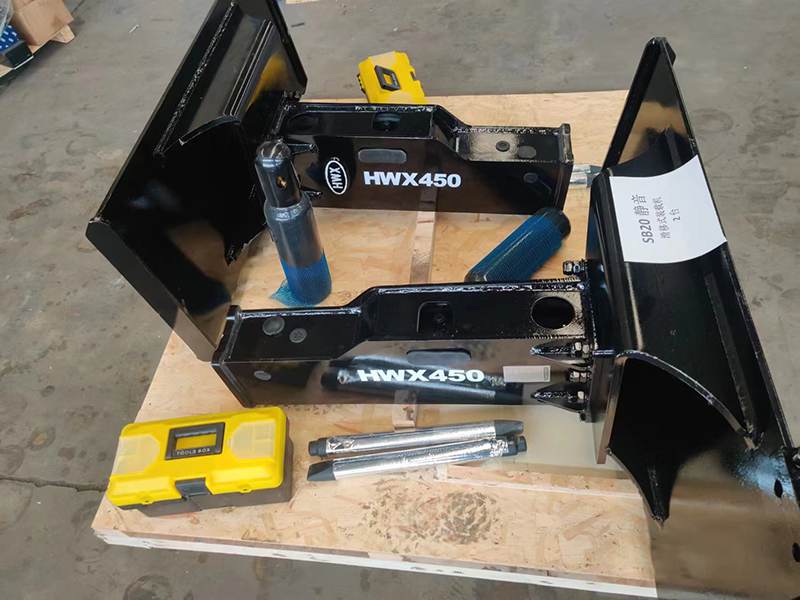
Housing Selection: The choice of housing type should be tailored to the specific operating environment. For indoor operations or noise-sensitive work sites, the “Silent Type” (Box-type) housing is recommended; for open-air engineering projects, the “Side Type” housing is a suitable choice, offering greater convenience for routine maintenance and chisel replacement.
6. Operating Environment and Chisel Selection
Select the appropriate chisel (steel tool) based on the specific working conditions:
Flat/Cross-head: Suitable for breaking concrete pavements or rocks of medium hardness.
Conical (Pointed) Head: Suitable for breaking high-hardness ores or materials with porous structures.
Blunt Head: Suitable for secondary breaking applications or operations within stone quarries.