


In the heavy construction, quarrying, and utility industries, an excavator is only as productive as the attachment on the end
of its arm. While modern excavators are engineering marvels of hydraulic power and precision, it is the excavator bucket
that directly interfaces with the earth.
Choosing the wrong bucket type not only slows down cycle times and increases fuel consumption, but it also accelerates
wear and tear on the carrier’s hydraulic pump, pin-bushings, and structural linkages. For global distributors (L4 dealers)
and professional contractors (L3 buyers), understanding the specific design, metallurgy, and application of each bucket
type is the key to maximizing job-site ROI.
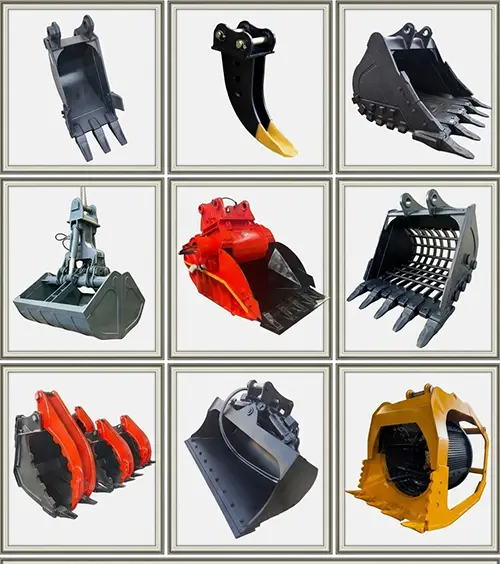
This comprehensive guide breaks down the primary excavator bucket types, their engineering features, and their ideal
applications.
- General Purpose (GP) / Standard Digging Bucket
The General Purpose (GP) bucket, often called the “Standard” or “Dirt” bucket, is the most common attachment shipped
with new excavators.
Design & Geometry: Features standard, medium-length teeth, a curved back for smooth material flow, and moderate
side-wear shrouds.
Best For: Digging in low-abrasion, cohesive materials such as topsoil, soft clay, sand, loose gravel, and silt.
Engineering Focus: GP buckets are designed for optimal capacity and fast cycle times. Because they are relatively
lightweight, they maximize the excavator’s lifting capacity and bucket volume in soft ground.
General Purpose (GP) / Standard Digging Bucket for CASE 580
- Heavy-Duty (HD) / Rock Bucket
When standard earthmoving transitions into abrasive quarrying, mining, or demolition, a GP bucket will quickly suffer
structural failure. This is where the Heavy-Duty (HD) or Rock Bucket is required.
Design & Geometry: Built with significantly thicker plates, lateral wear-straps on the bottom floor, side-cutters, and
heavy-duty forged teeth (often Esco or CAT-style).
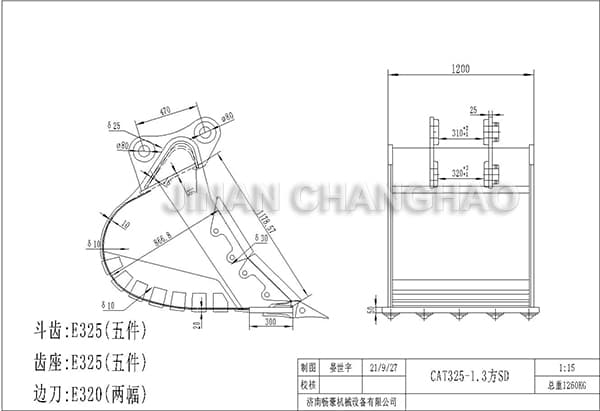
Best For: Fractured rock, blast rock, high-abrasion gravel, hard-packed clay, and demolition debris.
Engineering Focus: Heavy-duty rock buckets are constructed from high-tensile structural steel (like Q355B) with
critical wear zones armored in Hardox 500 or NM400 wear plates. They are built to withstand immense prying forces
and abrasive grinding.
60” CAT 330 excavator rock bucket attachment heavy duty bucket
-
-
- Trenching / Narrow Bucket
-
Urban utility work—such as laying pipelines, fiber-optic cables, or electric conduits—requires narrow excavations with
minimal soil disturbance.
Design & Geometry: Exceptionally narrow profiles, ranging from 150mm to 450mm in width. They are typically deep
and feature a tapered back to allow sticky mud to discharge easily.
Best For: Precision trenching, pipe-laying, and utility installations.
Engineering Focus: By concentrating the excavator’s hydraulic power onto a tiny surface area, narrow trenching
buckets achieve extreme breakout force, slicing through roots and hard-packed soil with ease.
Trenching Narrow Bucket for Sany SY55 SY60 SY65C SY75 Excavators 200mm-450mm Digging Bucket
-
-
- Grading / Clean-up / Mud Bucket
-
Once a trench is dug or a slope is cut, the ground must be finished to a smooth, uniform grade.Design & Geometry: Wide, shallow buckets with a straight, flat leading edge instead of teeth. They often feature a
Bolt-on Cutting Edge (BOCE) made of Hardox steel.
Best For: Topsoil spreading, bank finishing, slope grading, ditch cleaning, and handling soft muddy materials.
Engineering Focus: Designed to move large volumes of loose material quickly. Their wide, flat footprint ensures they
leave a clean, “mirror-finish” on slopes and pads without scarring the ground.
Excavator clean-up bucket ditch cleaning bucket ditching grading bucket
-
-
- Hydraulic Tilting Bucket
-
When slope finishing requires cutting angles that do not align with the excavator’s tracks, a standard grading bucket is no
longer sufficient.
Design & Geometry: Features an integrated tilting hanger controlled by dual heavy-duty horizontal hydraulic
cylinders and a large central pivot pin. It offers a standard tilting range of ±45° (90° total).
Best For: Precision batter finishing, ditch cleaning, slope profiling, and backfilling.
Engineering Focus: Built to serve as a precision grading tool. Advanced models (such as those from HWX) integrate
counterbalance safety valves to hydraulically lock the cylinders at the exact set angle. This completely eliminates
“bucket drifting” under heavy wet clay loads. The low-profile structure keeps the bucket’s center of gravity close to the
excavator stick, preserving over 95% of the carrier’s original breakout force.
20 Ton Excavator Hydraulic Tilt Mud Bucket
-
-
- 360-Degree Rotating & Tilting Bucket (Tiltrotator Series)
-
For the ultimate in structural flexibility and complexity, the 360-Degree Rotating Bucket represents the pinnacle of modern
attachment technology.
Design & Geometry: Combines a hydraulic tilting mechanism with a continuous 360° hydraulic rotating motor
(rotary actuator). This creates a multi-axis “wrist” at the end of the excavator arm.
Best For: Working in extremely confined spaces, grading around obstacles (such as manholes or utility poles), complex
landscaping, and precision structural backfilling.
Engineering Focus: Often referred to as a “Tiltrotator” compatible bucket, this system allows the operator to rotate
and tilt the bucket to any conceivable angle. By allowing the bucket to work sideways or backward, it eliminates up to
90% of excavator track movement. This not only cuts grading time in half but also significantly reduces fuel
consumption and track wear on expensive civil engineering sites.
360° Rotating & Tilting Grading Bucket for Excavator
-
-
- Skeleton / Screening Bucket
-
In recycling, sorting, and quarry operations, contractors often need to separate rocks and concrete rubble from fine topsoil
on-site.
Design & Geometry: Instead of solid steel walls, the bottom and back of the bucket are formed by a grid of solid
round steel bars spaced at specific intervals (e.g., 50mm, 100mm, or 150mm).
Best For: Sorting rock from soil, clearing land of boulders while retaining topsoil, separating demolition rubble, and
river dredging.
Engineering Focus: Built to handle massive rock impacts. Premium manufacturers use high-strength Manganese
Steel for the screening bars, which actually hardens under continuous impact, preventing the bars from bending or
snapping.
Heavy-Duty Excavator Skeleton Bucket Rock Screening Bucket – 1.8m³ Capacity Fits for Komatsu PC400
-
-
- Hydraulic Thumb / Grab Bucket
-
Traditional buckets can only scoop; they cannot grab. In demolition, forestry, and waste sorting, operators need a claw-like
function.
Design & Geometry: A standard digging bucket integrated with a heavy-duty hydraulic “thumb” mounted to the
bucket hanger. Both leading edges are heavily serrated (saw-toothed).
Best For: Grabbing logs, handling large boulders, sorting demolition waste, lifting steel beams, and clearing brush.Engineering Focus: It provides a “2-in-1” function. The operator can use the bucket for standard digging, and then engage the hydraulic cylinder to clamp down on irregular objects with surgical precision.
Excavator Thumb Buckets Hydraulic Grab Bucket Manufacturer
- 9 Excavator Jaw Crusher Bucket
Excavator Jaw Crusher Bucket, Mobile Concrete and Stone Crushing Bucket. With rising dumping fees and strict environmental regulations on concrete disposal, on-site recycling has become a major profit center.
Design & Geometry: Features a wide, wedge-shaped intake mouth leading into a heavy-duty mechanical crushing jaw driven by dual high-torque hydraulic motors. It includes a fast shim-adjustment mechanism to easily change the output size of the crushed aggregate.
Best For: On-site crushing and recycling of concrete rubble, bricks, asphalt, demolition waste, and natural quarry rock.
Engineering Focus: Engineered for extreme structural survival. The entire internal crushing chamber is lined with replaceable Hardox 500 wear plates, and the heavy-duty crushing jaws are cast from high-manganese steel (Mn18Cr2) that work-hardens under continuous impact. Dual direct-drive motors provide massive start-up torque, enabling the bucket to crush and clear blockages under full load without stalling.
Excavator Crusher Bucket | Turn Your Digger into a Mobile Crusher
Summary: Matching Bucket Material to Site Demands
| Material Tier | Steel Type | Ideal For | Why it Matters |
|---|---|---|---|
| Standard Structure | Q355B / ASTM A572 | Bucket shells, ear plates, minor bracing | High yield strength, excellent weldability, and impact resistance. |
| Medium Wear | NM400 / AR400 | Side-cutters, bottom wear-straps, standard lips | Good wear resistance; extends lifetime in moderately abrasive soil. |
| Extreme Wear | Hardox 500 / AR500 | Rock bucket lips, BOCE, quarry wear-shields | Outstanding hardness; resists intense frictional sliding and rock grinding. |
Conclusion: The HWX Advantage
At HWX (Jinan Changhao), we don’t believe in “one-size-fits-all” attachments. Every bucket in our lineup—from our
150mm micro-trenching buckets to our massive 1.8m³ manganese skeleton buckets and ±45° dual-cylinder tilting mud
buckets—is engineered to match original OEM specifications (including Sany, Caterpillar, Komatsu, Yanmar, and Kubota).
By combining precision structural geometry with premium metallurgy (Q355B + Hardox 500), we deliver high-durability,
professional-grade attachments that reduce cycle times and lower operating costs on every shift.
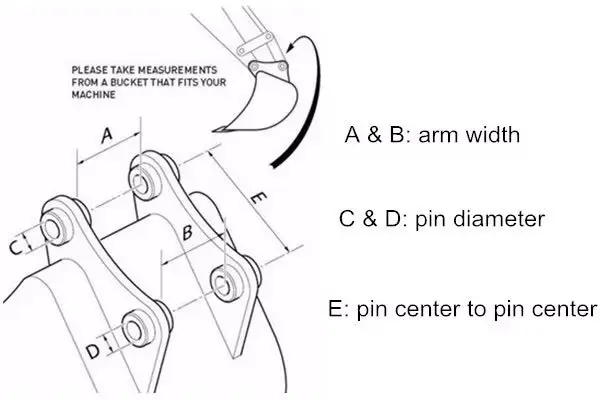
For bulk wholesale orders, custom pin-dimension matching, or regional dealership opportunities, contact the HWX team
today!