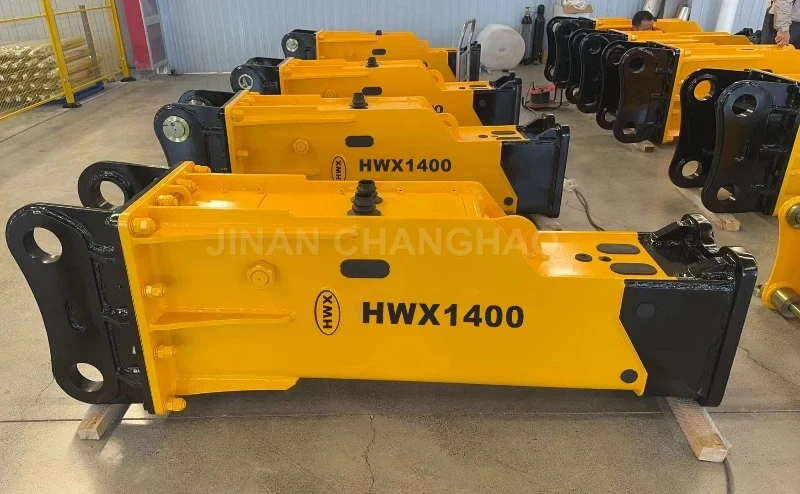



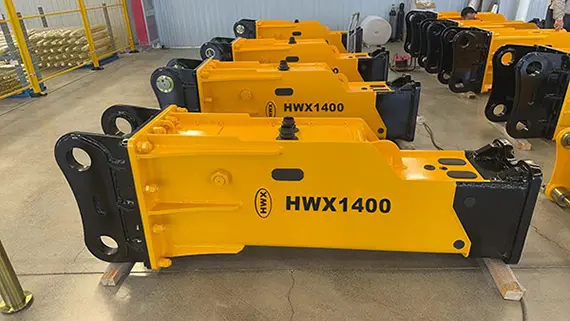
20 Ton Excavator Concrete Demolition Hammer hydraulic breaker supplier
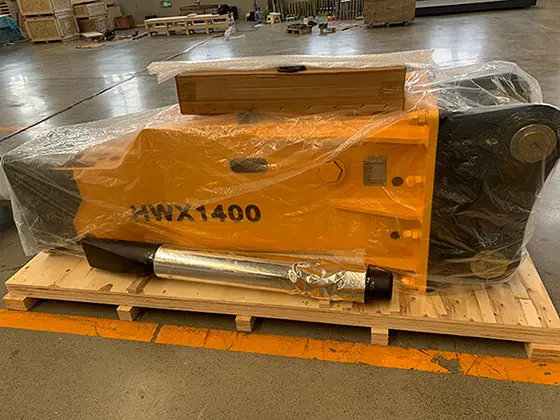
Silent Hydraulic Breaker 1400mm Chisel Diameter Hydraulic Breaker for CAT 320 Komatsu PC200-7 PC200-8 Hitachi EX200 Hyundai R210
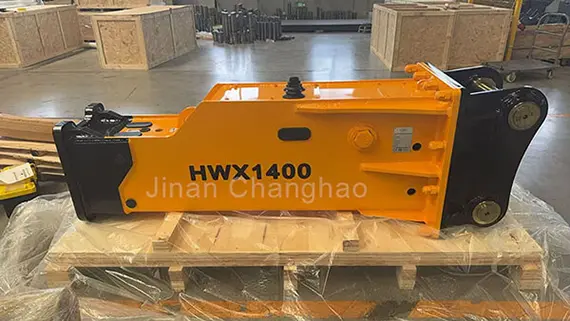
20 Ton excavator hydraulic breaker manufacturer in China
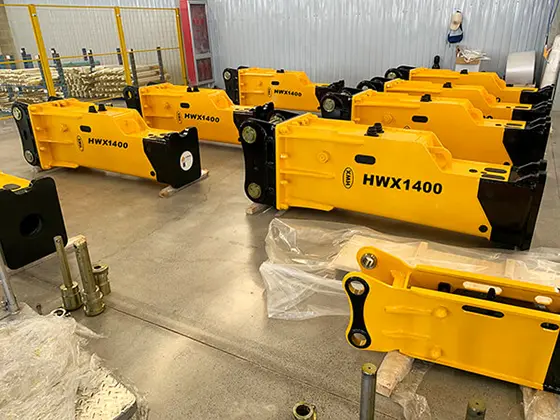
HWX1400 hydraulic breakers export to Peru
| Product Name | Material |
| Piston | GCR15, 616V |
| Cylinder | 20CrMo Six-sided forging |
| Front Head | 42 crmo forged heat treatment |
| Back Head | 42crmo forged heat treatment |
| Control Valve | 20CrMo Six-sided forging |
| Front Cover | 42CrMo |
| Ring Bush | 42CrMo |
| Through Bolt | 42CrMo |
| Chisel | 42CrMo forging, Each drill rod has undergone 3 cold heattreatments, long life drill rod |
| Seal kit retainer | famous brand,High temperature resistance |
| Bracket | GB45,Wear resistance coefficient 400 |
| Strike strength | 1.5 times of ordinary breaker hammer |
| warranty | 12 month |
| Model Type | HWX1400 |
| Weight | 1800KG |
| Length | 2480mm |
| Working Pressure | 160-180 kg/cm² |
| Oil Flow | 120-180 L/min |
| Impact Rate | 350-500 bpm |
| Oil hose dia. | 1 inch |
| Chisel Dia. | 140mm |
| Chisel | 42CrMo forging, Each drill rod has undergone 3 cold heattreatments, long life drill rod |
| Excavator | 19-26 Ton |
20 Ton Excavator Hydraulic Breaker with 140mm Chisel – OEM Supplier in China with Warranty 12 Month
How to Choose the Right Hydraulic Breaker for Your 20T Excavator
Step 1: The Golden Rule – Match the Hydraulic Breaker Weight to Your Excavator Carrier
This is the most crucial factor. The hydraulic breaker must be compatible with the weight and hydraulic capacity of your 20-ton excavator.
Recommended Breaker Weight: For a 20-ton (40,000 lb) excavator, the ideal breaker weight typically falls between 1,800 kg and 2,200 kg (4,000 – 4,800 lbs).
Why it Matters:
Too Heavy: An oversized hydraulic breaker hammer can cause severe damage. It strains the excavator’s front-end structure, increases wear on pins and bushings, and can lead to stability issues, increasing the risk of tipping.
Too Light: An undersized hydraulic breaker will be inefficient. It will struggle to break material, leading to wasted time and fuel. Furthermore, it will “bounce” excessively, transferring destructive vibrations back into the excavator’s stick and boom.
Pro Tip: Always consult your excavator’s operator manual for the manufacturer’s recommended auxiliary hydraulic flow and pressure ratings, as well as the maximum allowable attachment weight.
Step 2: Understand Your Hydraulic System (Flow & Pressure)
Your excavator’s hydraulic system is the lifeblood of the breaker. Mismatched hydraulics are a primary cause of poor performance and breaker damage.
Required Flow (GPM/LPM): A breaker for a 20T machine usually requires a hydraulic flow between 90 – 140 Liters per minute (24 – 37 Gallons per minute).
Operating Pressure (BAR/PSI): Standard operating pressure is typically around 160 – 180 bar (2,300 – 2,600 psi).
The Consequences of Getting it Wrong:
Insufficient Flow: The breaker will cycle slowly, sounding weak and “mushy.” This drastically reduces productivity.
Excessive Flow: Too much flow can blow seals, damage internal components, and void warranties. Always use a breaker that includes a built-in auto-regulator or requires an external accumulator to manage pressure spikes and ensure consistent power.
Step 3: Identify Your Primary Application and Material
Not all breakers are created equal. The type of material you break most often determines the best breaker design and required impact energy.
Concrete Demolition & Asphalt (Soft to Medium Material): Focus on a breaker with a higher blow rate (BPM). Faster cycles allow for rapid material processing.
Trench Rock, Granite, Basalt (Hard/ Massive Rock): Prioritize a breaker with higher impact energy per blow (ft-lb/Joules). A powerful, slower blow is more effective at fracturing tough, consolidated rock.
Mixed Use/ General Purpose: Choose a balanced 20 Ton excavator hydraulic breaker that offers a good compromise between impact energy and speed.
Step 4: Don’t Overlook the Details: Selection of the Hydraulic Beraker Chisel
Hydraulic Breaker Chisel Selection: The tool is the point of contact. Using the wrong tool accelerates wear and reduces efficiency.
Moil Point: Best for breaking large, hard rock and boulders.
Flat Chisel: Ideal for concrete slab demolition and pavement breaking.
Pyramid Point: Excellent for trenching in rocky ground and breaking extremely hard material.
Mounting Bracket: The bracket must be a perfect fit for your specific excavator model. An imprecise fit creates dangerous levels of play, leading to premature failure of the breaker, the bracket, and your excavator’s stick. Ensure your supplier provides model-specific brackets.
Step 5: Choose a Reputable Supplier and Consider the Total Cost of Ownership
The initial purchase price is only part of the equation. Consider the long-term costs.
Quality of Construction: Look for breakers with features like auto-lubrication systems, high-strength, heat-treated steel housings, and durable piston and tool steel. We can install auto-lubrication systems on our hydraulic breakers.
Availability of Parts & Service: Choose a supplier or manufacturer with a strong global parts network. When you need a seal kit or a new chisel, you can’t afford to wait weeks for shipping. Free replacements parts will be shiipped quickly in 12 month warranty.
Warranty: A strong warranty is a sign of the manufacturer’s confidence in their product.