


The hydraulic breaker chisel is a core component that withstands high-frequency impact, extrusion and abrasion. Its material must balance three key properties: high strength, high toughness and high wear resistance. The mainstream material selection is alloy structural steel, complemented by precise heat treatment processes to enhance overall performance. Details of the classification and characteristics are as follows:
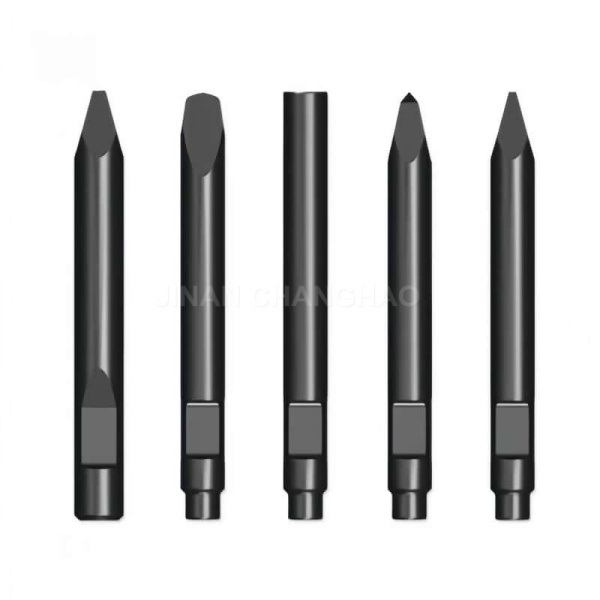
Chisel for hydraulic breaker
I. Mainstream Chisel Materials and Grades
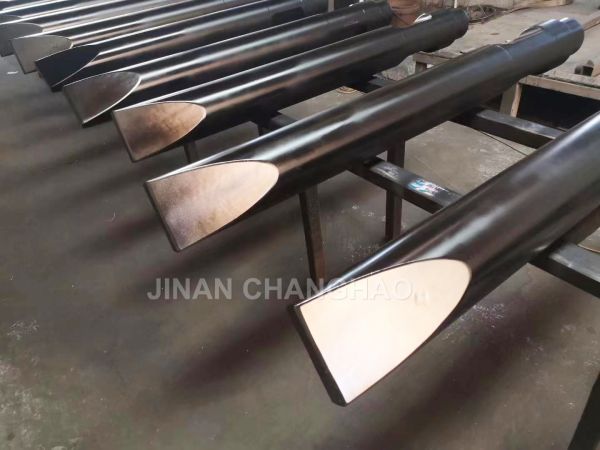
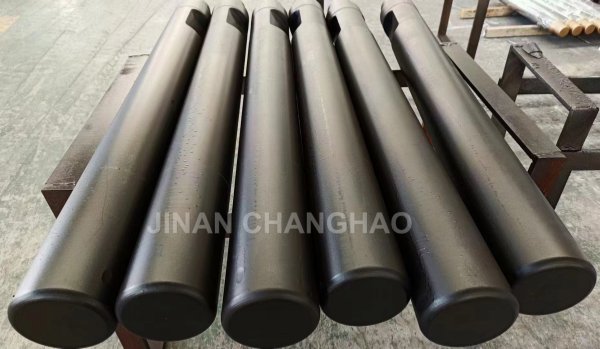
- 42CrMo Alloy Structural Steel
It is currently the most widely used chisel material, suitable for the vast majority of medium and heavy-duty hydraulic breakers (with chisel diameter ranging from 85 mm to 180 mm).
Core Properties: Tensile strength ≥ 1080 MPa, yield strength ≥ 930 MPa, and excellent impact toughness. After quenching and tempering combined with surface hardening treatment, the surface hardness can reach HRC55–58, while the core retains toughness at HRC28–32—this prevents the chisel from brittle fracture under impact.
Applications: Regular working conditions such as concrete crushing, secondary ore crushing and pavement demolition. It is compatible with medium-tonnage models of mainstream brands including Furukawa, Epiroc and KOMAC.
- 35CrMo Alloy Structural Steel
This is a cost-effective chisel material, typically used for light-duty hydraulic breakers (with a chisel diameter of 45–75 mm, compatible with 1–8 ton excavators).
Core Properties: Its strength is slightly lower than that of 42CrMo, with a tensile strength of ≥ 980 MPa and excellent toughness. After heat treatment, the surface hardness reaches HRC52–55, while the overall cost is lower.
Applications: Light working conditions such as small-scale building demolition, landscaping construction and agricultural crushing operations.
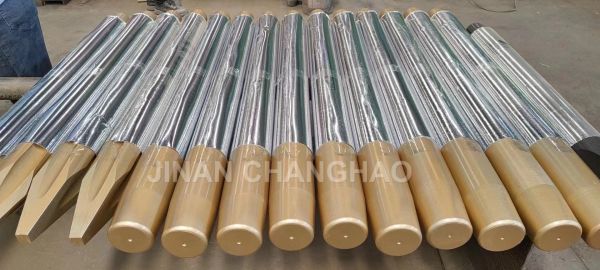
excavator breaker chisel
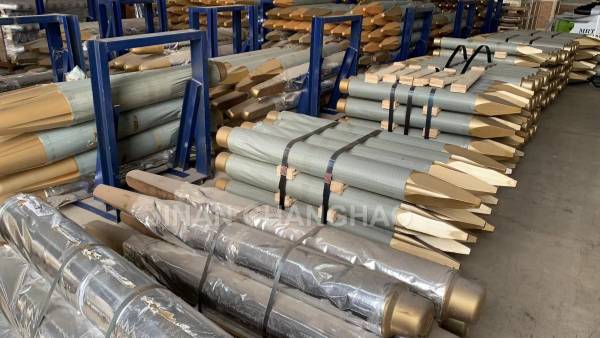
Chisel in stock
- TSG46A/TSG48A Special Chisel Steel
This is a premium-grade special steel exclusively engineered for hydraulic breaker chisels, custom-manufactured by professional steel mills. The alloy ratio of chromium, molybdenum, vanadium and other elements has been optimized to specifically enhance impact fatigue resistance.
Core Properties: Its fatigue strength is 15%–20% higher than that of 42CrMo steel. The surface hardness can reach HRC58–60, and the core toughness is more stable, enabling it to withstand high-frequency impacts (300–600 bpm).
Applications: Severe working conditions such as heavy-duty mining crushing and high-hardness rock breaking. It is Compatible with large-tonnage hydraulic breakers such as Epiroc models above HB4200 and Furukawa HB30G.
- High Nickel-Chromium Alloy Steel (Premium Customized Grade)
This material is rarely adopted for ultra-heavy-duty chisels (with a diameter of over 200 mm, compatible with excavators of 80 tons and above). Nickel is added to enhance low-temperature toughness, while chromium is incorporated to improve rust and wear resistance.
Applications: Extreme working conditions such as construction in frigid regions and crushing of high-hardness granite.
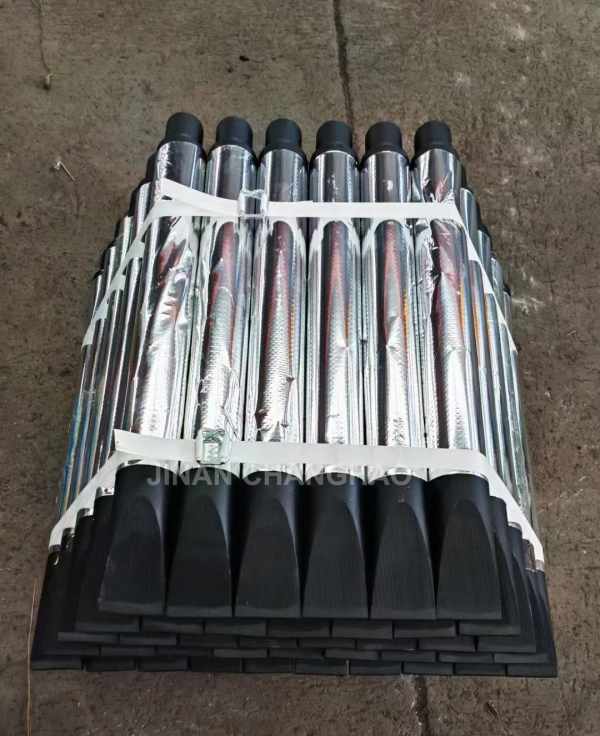
hydraulic breaker chisel
II. Key Heat Treatment Processes (Determinant of Chisel Service Life)
The performance of a chisel depends not only on its material, but also more critically on the heat treatment process. The core procedures are as follows:
Quenching and Tempering (Quenching + High-temperature Tempering): Endows the chisel core with high strength and toughness, preventing fracture under impact.
Surface Hardening (Medium-frequency / High-frequency Hardening): A 3–5 mm hardened layer is formed on the chisel head and chisel surface, improving wear resistance significantly.
Weld Overlay Hardening for the Head: Wear-resistant alloys (e.g., tungsten carbide alloy) are deposited on the impact end of the chisel. This process can extend the service life by 2–3 times and is a standard configuration for heavy-duty working conditions.
| Working Condition | Recommended Material | Suitable Chisel Diameter |
| Light-duty (concrete, bricks & tiles) | 35CrMo | 45–75 mm |
| Normal-duty (pavement, secondary ore crushing) | 42CrMo | 85–180 mm |
| Heavy-duty (mining, hard rock crushing) | TSG46A/TSG48A + head surfacing welding | 150–210 mm |
| Extreme-duty (extreme cold, ultra-hard rock) | High nickel-chromium alloy steel | ≥200 mm |